Yoga can be practiced in many different ways, with each tradition offering its own approach to movement, breathing, concentration, and self-awareness. Among the well-known yoga traditions, Iyengar Yoga is particularly recognized for its careful attention to alignment, precision, and the intelligent use of props. Rather than rushing through a sequence of postures, this approach encourages practitioners to understand how the body is positioned and how each movement can be performed with greater awareness.
Iyengar Yoga was developed and systematized by B. K. S. Iyengar, whose teachings placed strong emphasis on the relationship between the body, mind, and breath. His approach made yoga accessible to people with different levels of flexibility, strength, and experience. Props such as blocks, belts, blankets, chairs, and bolsters can be used to support the body and help practitioners experience postures more effectively.
What Is Iyengar Yoga?
Iyengar Yoga is a method of Hatha Yoga that emphasizes accuracy in the performance of asanas. The practice encourages students to pay attention to details such as the position of the feet, alignment of the spine, movement of the joints, direction of the limbs, and balance of the body.
One of the distinguishing characteristics of this style is that poses are often held for a longer period than in faster-paced forms of yoga. This gives practitioners time to observe their physical sensations, correct their positioning, and develop a deeper understanding of the posture.
The Importance of Alignment
Alignment is at the heart of Iyengar Yoga. It refers to arranging different parts of the body in a way that creates stability, balance, and structural awareness within a posture.
For example, when practicing a standing pose, attention may be given to the placement of the feet, the direction of the knees, the position of the pelvis, the length of the spine, and the relationship between the arms and shoulders. These details can make a significant difference in how the posture feels.
Alignment also helps practitioners become more conscious of habitual movement patterns. Many people unknowingly favor one side of the body, collapse through certain joints, or hold unnecessary tension. A methodical approach can bring these patterns into awareness.
Precision in Yoga Practice
Precision does not mean rigidity. In Iyengar Yoga, it means practicing with attention and intention.
A practitioner may spend several minutes exploring a single posture instead of immediately moving to another one. During that time, they can observe whether their weight is distributed evenly, whether their breathing remains comfortable, and whether particular muscles are working unnecessarily hard.
This detailed approach can make a relatively simple posture surprisingly educational. A standing pose, for instance, can become an opportunity to study balance, grounding, posture, concentration, and breathing simultaneously.
Precision also encourages patience. Instead of measuring progress by how quickly someone can perform advanced poses, practitioners can focus on improving their understanding of foundational movements.
Why Props Are Used in Iyengar Yoga
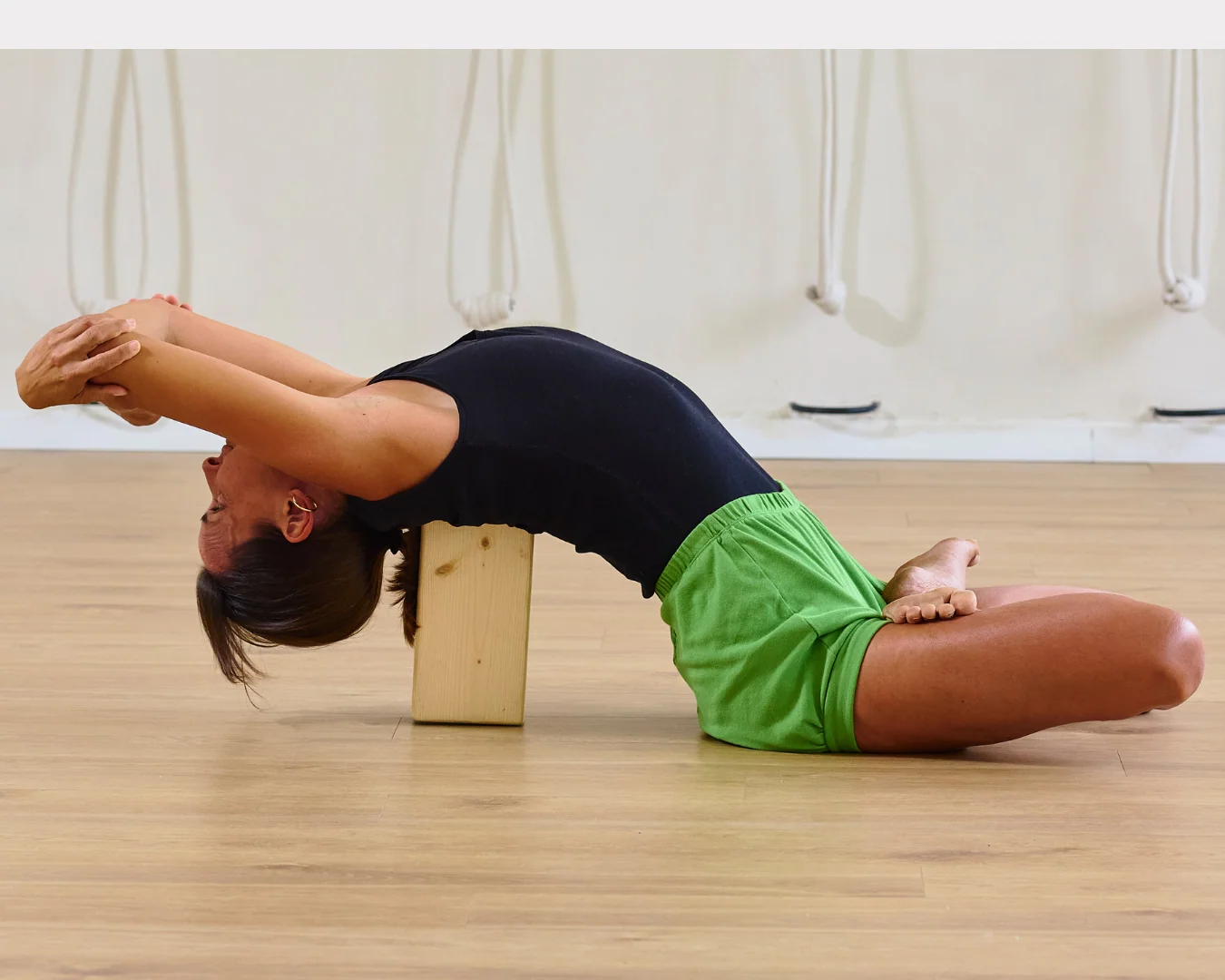
Yoga props are one of the most recognizable features of Iyengar Yoga. They are not simply accessories or tools for making difficult poses easier. When used appropriately, props can provide support, feedback, stability, and accessibility.
Common props include:
Yoga blocks: These can bring the floor closer to the hands and provide additional support.
Belts or straps: A belt can help extend reach or encourage awareness of proper positioning.
Blankets: Folded blankets can provide cushioning, elevation, or support.
Bolsters: These are useful for supported postures and restorative practices.
Chairs: Chairs can provide stability and create different ways to explore certain postures.
Wall support: A wall can assist with balance and help practitioners understand alignment.
For someone who cannot comfortably reach the floor in a standing forward bend, for example, a block may allow the person to maintain a more organized posture without excessive strain. Similarly, a belt can help someone work with their arms when limited shoulder mobility makes a particular position difficult.
Props and Accessibility
One of the valuable aspects of using props is that they can help adapt yoga practices to different bodies and circumstances. Not everyone begins yoga with the same flexibility, strength, proportions, or mobility.
A prop can modify the relationship between the body and the environment, allowing a practitioner to explore an asana without forcing a range of motion that is currently unavailable.
This can be particularly useful for beginners. Instead of interpreting limited flexibility as a failure, a student can use appropriate support while gradually developing strength, mobility, and body awareness. For those beginning their broader yoga education, programs such as a 200 hour yoga teacher training in rishikesh can also introduce foundational principles of asana practice, alignment, breathing, and yoga philosophy in a structured learning environment.
The Role of Breath and Awareness
Although alignment and props are highly visible elements of Iyengar Yoga, the practice extends beyond physical positioning. Awareness of breathing and mental concentration also plays an important role.
When a person becomes overly focused on achieving a particular shape, breathing may become tense or restricted. A mindful practitioner learns to notice this and adjust the posture accordingly.
Breathing can therefore act as an important source of feedback. A stable and comfortable posture should allow the breath to remain conscious rather than forcing the practitioner into unnecessary effort.
Holding Postures With Patience
Another important characteristic of Iyengar Yoga is the emphasis on staying in postures for an appropriate amount of time. Longer holds can give practitioners an opportunity to investigate the pose rather than simply moving into it and immediately moving out.
During a sustained posture, a student may notice changes in muscular effort, balance, breathing, and mental focus. This can develop a more detailed understanding of the body.
Iyengar Yoga for Beginners
Beginners can benefit from Iyengar Yoga because the method emphasizes learning the fundamentals carefully. Instead of expecting new students to immediately perform complicated postures, instruction can focus on basic standing poses, seated positions, forward extensions, twists, inversions, and other foundational practices according to the student’s experience and circumstances.